Top Framingham Locksmiths Service Team
Local locksmith team
Jun 4, 2026 11 min read
If you run a business in Framingham — whether it's a retail shop on Cochituate Road, a medical office near MetroWest Medical Center, or a multi-suite professional building downtown — you've probably handed out more keys than you can count. A key for the front door. A separate key for the back. One for the storage room. Another for the server closet. Before long, your managers are carrying a janitor's ring and your part-time staff have access to areas they genuinely don't need. A master key system solves this problem at the architectural level, letting you build a hierarchy of access that mirrors the way your business actually works.
This guide is written specifically for Framingham business owners who want to understand how tiered keying works, what hardware it requires — including the mortise lock systems that form the backbone of most commercial installations — and how to decide whether a master key system is the right move for your property. No jargon, no filler — just practical information from the team at Top Framingham Locksmiths, your local 24/7 mobile commercial locksmith.
## What a Master Key System Actually Is (and How the Tiers Work)
A master key system is a planned hierarchy of locks and keys in which a single master key opens every lock in the system, while individual change keys each open only one specific lock. Between those two extremes you can add layers — called grand master keys, great grand master keys, and sub-master keys — so that a department head can open every door in their wing without touching the executive suite, while the CEO can move freely through the entire building with a single key. The result is a tiered access structure that maps perfectly onto your org chart.
In practice, picture a Framingham dental practice with three dentists and a front-desk team. The office manager holds a master key that opens the reception area, every exam room, the sterilization room, and the supply closet. Each dentist holds a sub-master key that opens their personal exam room and the shared sterilization area, but not billing storage. Front-desk staff hold individual change keys that open only the reception area. Everyone has exactly the access they need — and nothing more. That precision is only possible when the locks themselves are engineered to accept it.
## Why Mortise Locks Are the Foundation of Commercial Master Key Systems
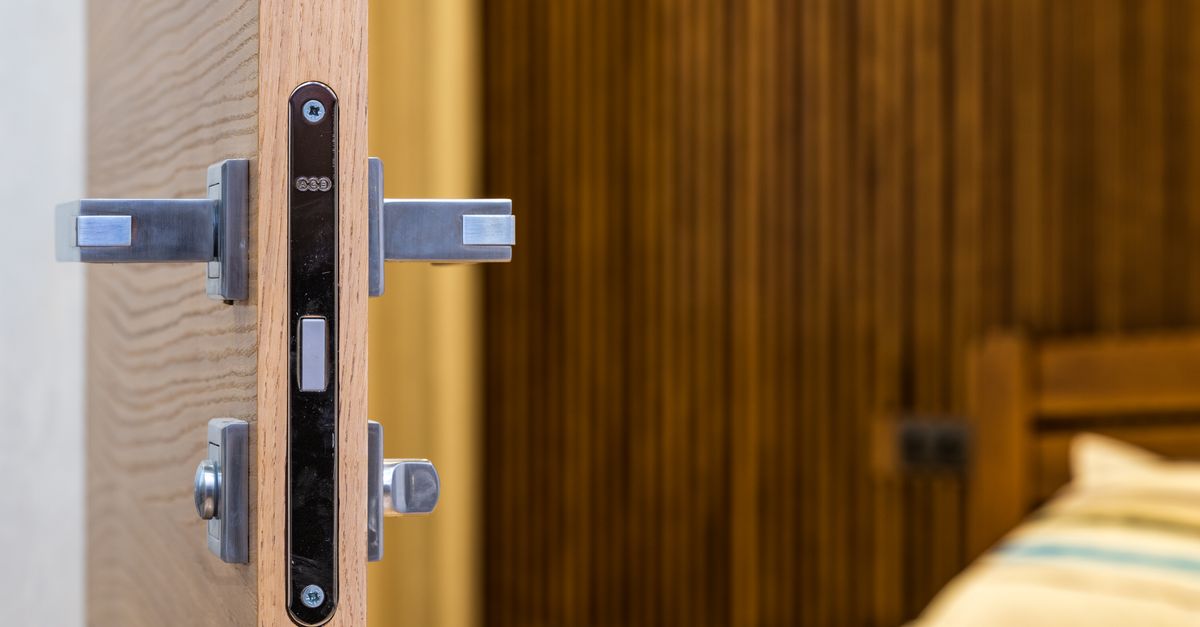
Not every lock type is built to participate in a true master key system. Cheap door knob locks — the kind you might find on an interior residential door — use simple pin tumbler mechanisms with limited customization. A mortise lock, by contrast, is a heavy-duty unit that is set into (mortised into) the door itself rather than surface-mounted. It combines a latch, a deadbolt, and sometimes a lever or knob in one integrated chassis, and its pin tumbler cylinder is designed with the tolerance and pin stack depth needed to accept master wafers — the small extra pins that allow a single lock to respond to two or more different keys. That engineering is what makes a mortise lock the workhorse of commercial keying systems. At Top Framingham Locksmiths, mortise lock installation, re-keying, and system expansion are core parts of our commercial locksmith work. If your building currently has builder-grade door knob locks throughout, upgrading to mortise hardware is often the first conversation we have before designing any master key plan.
Beyond the mechanical advantages, mortise locks simply hold up better under the daily punishment of a busy commercial property. A Framingham office suite that sees fifty door cycles a day needs hardware rated for that load. Mortise lock bodies are typically made of solid brass or steel, and quality cylinders from brands like Schlage integrate cleanly with restricted keyways — meaning keys can only be duplicated with authorization, which is a critical security layer for any master key system you want to control long-term.
## Designing the Right Access Tiers for Your Framingham Business
Before a single lock is touched, the most important work happens on paper. A proper master key system design starts with an access matrix — a simple grid that lists every door on one axis and every employee role on the other, with checkmarks showing who needs access to what. This step forces you to think through scenarios you might otherwise overlook: Does your cleaning crew need access after hours? Should your IT contractor be able to enter the server room alone? Does the fire exit require a key at all, or should it be hardware-only egress? Getting clear answers before the system is keyed saves you significant hassle later, because re-keying a master system to add a forgotten tier is more involved than building it correctly from the start.
Once the matrix is complete, a skilled locksmith translates it into a keying specification — a document that assigns key cuts and master wafer combinations to every lock in the building. For smaller Framingham businesses (a single suite, five to fifteen doors), a simple two-level system with one master key and individual change keys is usually sufficient. Larger properties — a multi-tenant building on Waverly Street, for example, or a Framingham State University-adjacent office complex — may need three or four levels. Our team at Top Framingham Locksmiths walks through this planning step with every commercial client, because a system designed thoughtfully at the start is one you can actually manage for years without calling a locksmith every time a staff member leaves. If you are ready to start that conversation now, call us at (508) 905-4891 — we answer around the clock.
## What the Installation Process Looks Like (and What to Expect)
For business owners who have never had a master key system installed, the process is more straightforward than it sounds. After the access matrix is confirmed, we source or order the appropriate mortise lock hardware and restricted-keyway cylinders. On installation day, a mobile locksmith from our team arrives at your Framingham location — whether that's early morning before your staff arrives or after closing so there's no disruption to your customers — and works door by door through the building. Each existing lock cylinder is replaced or re-pinned to match the new key specification, new mortise lock bodies are installed where needed, and every key in the system is tested against every lock it is supposed to open and every lock it should not open. That final verification step is non-negotiable; a single mis-pinned cylinder can compromise the entire tier structure.
From a cost standpoint, several factors shape the final investment: the number of doors in the system, whether existing hardware can be re-pinned or needs full mortise lock replacement, the specific cylinder brand and keyway you choose, and the time required on-site. Before any work begins, we confirm an exact up-front price — no surprises when the job is done. We also provide a keying record that documents every key number, cut combination, and door assignment, which you keep in a secure location. That record is what allows future expansion — adding a new office or a new access tier — without starting from scratch.
## Ongoing System Management: Rekeying, Lost Keys, and Keeping Control
A master key system is only as strong as the control you keep over it. The moment a master key is lost or an employee with a sub-master leaves without returning their key, you face a decision: re-key the affected tier or accept the risk. Because restricted keyways prevent unauthorized key duplication at most hardware stores, the window of risk is narrower than with a standard key — but it is not zero. Best practice is to treat any unaccounted master or sub-master key as a trigger for re-keying that level of the system. Our emergency locksmith team is available 24/7 for exactly these situations, because a key-control crisis does not wait for business hours.
Other scenarios where ongoing support matters: a tenant move-out in a multi-suite building (re-key that suite's change keys without disturbing the rest of the system), an office renovation that adds new doors (expand the existing specification rather than starting over), or a security audit that reveals certain staff have accumulated keys to areas outside their role (re-issue and re-key selectively). Top Framingham Locksmiths maintains records for every system we install, so when you call us six months or two years later, we can pick up exactly where we left off. For urgent situations — a broken mortise lock late at night, a master key snapped in a cylinder at 6 a.m. — call (508) 905-4891 and a trained, experienced technician will be on the way.
## 25 Commercial and Residential Locksmith Services We Provide in the Framingham Area
Top Framingham Locksmiths is a fully mobile, insured locksmith operation serving Framingham and the surrounding MetroWest communities around the clock. Here is a specific look at what our team handles every day: master key system design and installation, mortise lock installation and repair, mortise lock re-keying for tenant turnover, high-security cylinder upgrades with restricted keyways, door knob lock replacement and re-keying, deadbolt installation on commercial and residential doors, panic bar and push-bar exit device installation, access control system integration with keyed hardware, commercial lockout response, residential lockout response, car lockout service, lost car key replacement, transponder key programming, key fob replacement and programming, broken key extraction from locks and ignitions, lock cylinder repair after forced-entry attempts, door frame and strike plate reinforcement, safe opening for businesses and homeowners, safe combination changes, padlock keying for warehouses and storage units, mailbox lock replacement, intercom and buzzer system lock integration, lock hardware consultation for new construction build-outs, after-hours emergency locksmith response, and scheduled preventive maintenance inspections for commercial lock hardware. Whether you need a single door knob lock swapped on a Framingham apartment or a full master key system across a 30-door commercial property, our mobile units are equipped to handle the work on-site.
Frequently asked questions
Can a locksmith open any lock?+
A skilled, experienced locksmith can open the vast majority of locks encountered in everyday commercial and residential settings — including mortise locks, door knob locks, deadbolts, padlocks, and most automotive locks. There are certain ultra-high-security cylinders specifically engineered to resist non-destructive opening, and in those cases a locksmith will discuss the best approach with you, which may involve drilling as a last resort. At Top Framingham Locksmiths, we always begin with the least invasive method and confirm the approach with you before proceeding. We also verify ownership or authorization before opening any lock — that step protects both you and the security of your property.
What is the crime rate in Framingham, Massachusetts, and should that affect my lock choices?+
Framingham is a large, diverse city — the largest town in Massachusetts before it became a city in 2018 — and like any urban center it has neighborhoods with varying security profiles. Areas closer to the downtown core and certain commercial corridors along Routes 9 and 135 see more property crime reports than quieter residential neighborhoods like Nobscot or Saxonville. Regardless of your specific location, Framingham's density and the volume of foot traffic in commercial zones make quality lock hardware a genuine priority rather than a luxury. Upgrading from basic door knob locks to mortise lock hardware with restricted keyways meaningfully raises the effort required for unauthorized entry, which is a proven deterrent. If you are unsure what level of security your location warrants, our team is happy to do a walk-through assessment.
What does a locksmith do beyond just opening locked doors?+
Opening locked doors is actually a small slice of what a full-service commercial locksmith handles day to day. At Top Framingham Locksmiths, our work includes designing and installing master key systems, re-keying locks for tenant or staff turnover, replacing and upgrading mortise lock hardware, programming transponder car keys and key fobs, extracting broken keys from cylinders and ignitions, reinforcing door frames and strike plates, opening and servicing safes, installing panic bar exit devices, and consulting on access control integration. Think of a locksmith as a security hardware specialist — someone who understands how physical access works at every level of a building or vehicle and can design solutions that balance convenience with genuine protection.
How do I handle a lockout at my Framingham business — what are the right steps?+
First, stay calm and check every option before assuming the building is completely inaccessible. Confirm whether another employee or keyholder is nearby and reachable. Check whether any secondary entrance — a rear door, a parking-level access point, or a window that is legitimately accessible — is open. If your building has a property manager or building superintendent, they may have a master key already on file. If none of those options resolve the situation, call a professional locksmith — do not attempt to force, pry, or improvise entry, which risks damaging the door, the mortise lock or door knob lock hardware, and potentially triggering a security alarm. Top Framingham Locksmiths operates 24 hours a day, seven days a week, including holidays. Call (508) 905-4891 and a trained technician will be dispatched to your location. We will verify your authorization to access the property and then use professional, non-destructive methods to get you in as quickly as possible.